Char-Broil Smoker Manual: A Comprehensive Guide
Char-Broil has entered the smart home arena with its first Wi-Fi connected smoker, offering remote control capabilities. Maintaining consistent temperatures, crucial for smoking, can be challenging, especially with charcoal models.
This manual provides detailed instructions for assembly, operation, and maintenance, ensuring optimal performance. Explore techniques for moisture control and utilizing temperature probes for perfect results every time.
Understanding Your Char-Broil Smoker
Char-Broil smokers represent a significant step into the world of outdoor cooking, blending traditional smoking methods with modern convenience. These smokers, as highlighted by recent innovations, are increasingly incorporating smart technology, like Wi-Fi connectivity, allowing for remote monitoring and control – a feature designed to simplify the smoking process for both beginners and seasoned pitmasters.
However, the core principle remains consistent: achieving and maintaining a consistent temperature, ideally between 200-225°F, is paramount for successful smoking. This can be particularly challenging with charcoal smokers, requiring diligent attention to fuel management; Gas and pellet smokers offer more straightforward temperature regulation, but understanding the nuances of each system is key.
This understanding extends to recognizing the various components of your Char-Broil smoker and their specific functions. From the fuel source and temperature controls to the water pan (if equipped) and ventilation system, each element plays a vital role in the overall smoking experience. Familiarizing yourself with these aspects will empower you to troubleshoot issues and optimize your results, ultimately leading to delicious, perfectly smoked meats.
Types of Char-Broil Smokers
Char-Broil offers a diverse range of smokers designed to cater to various preferences and skill levels. Traditionally, they’ve been known for charcoal and gas-powered models, providing classic smoking experiences. However, the brand has recently expanded into the pellet smoker market, embracing the convenience and precise temperature control that pellet technology offers.
Their charcoal smokers often feature adjustable air vents for temperature regulation, requiring more hands-on management to maintain consistent heat. Gas smokers, on the other hand, provide easier temperature control via adjustable burners, making them a good choice for beginners. The newest addition, Wi-Fi connected smokers, represent a leap forward, allowing remote adjustments and monitoring via a smartphone app.
The “Simple Smoker” line, while praised for its performance, highlights the importance of user-friendly technology; a poorly executed app can detract from the overall experience. Understanding the strengths and weaknesses of each type – charcoal, gas, pellet, and smart – is crucial when selecting a Char-Broil smoker that aligns with your needs and desired level of involvement in the smoking process.
Key Components & Their Functions
Char-Broil smokers, regardless of type, share several key components essential for successful operation. The primary cooking grates provide the surface for placing food, while a water pan – often included – helps maintain moisture levels during extended smoking sessions. Air vents, crucial in charcoal models, regulate airflow and, consequently, temperature.
Gas smokers utilize burners and a temperature control knob to manage heat, while pellet smokers employ an auger system to feed wood pellets into a firepot. Newer, Wi-Fi enabled models incorporate a digital controller and connectivity module for remote monitoring and adjustments. Temperature probes, often sold separately, allow precise internal meat temperature readings.
Grease management systems, including grease trays and collection buckets, are vital for easy cleanup and preventing flare-ups. Understanding the function of each component – from the basic grates to the advanced digital controls – is paramount for maximizing your smoking experience and ensuring safe, efficient operation of your Char-Broil smoker.
Setting Up Your Char-Broil Smoker
Proper setup is crucial for optimal performance. This involves initial assembly, carefully selecting your fuel source – charcoal, wood chips, or pellets – and understanding the smoker’s temperature controls.
Initial Assembly Instructions
Before your first smoke, careful assembly is paramount. Begin by unpacking all components and verifying against the parts list included in your Char-Broil smoker manual. Lay out all pieces on a protected surface to prevent scratches.
Typically, assembly starts with the base, followed by attaching the legs, ensuring they are securely fastened. Next, assemble the smoker chamber, carefully aligning and connecting the side panels. Pay close attention to the door mechanism, ensuring a tight seal for efficient smoke retention.
Install the grease management system, which usually involves a grease tray and collection pan. This is vital for easy cleanup and preventing flare-ups. Finally, attach any shelves or racks, confirming they are stable and can support the weight of your food.
Refer to the detailed diagrams in your manual for specific instructions related to your Char-Broil smoker model. Tighten all screws and bolts securely, but avoid over-tightening, which could damage the components. A properly assembled smoker is the foundation for successful smoking!
Fuel Selection: Charcoal, Wood Chips & Pellets
Char-Broil smokers offer versatility in fuel choices, impacting both temperature and flavor. Traditional charcoal provides intense heat and a classic smoky taste. Briquettes burn longer and more consistently, while lump charcoal offers higher temperatures and a purer smoke.
Wood chips are essential for imparting distinct flavors. Hickory, mesquite, apple, and cherry are popular options, each lending a unique profile to your food. Soak wood chips in water for at least 30 minutes before use to prolong their smoking time.
Some Char-Broil models support wood pellets, offering convenience and precise temperature control. Pellets are typically used in conjunction with an auger system that automatically feeds fuel to maintain consistent heat.
Experiment with different fuel combinations to discover your preferred flavor profiles. Remember that the type of wood significantly influences the final taste of your smoked meats. Always use dry, seasoned wood for optimal results and minimal smoke production.
Temperature Control Systems Explained
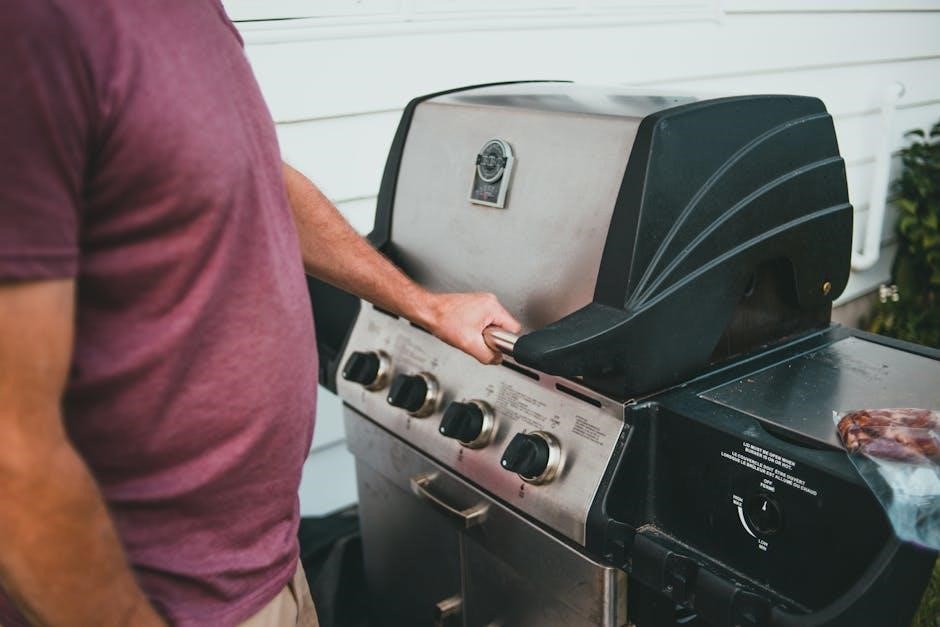
Char-Broil smokers employ various temperature control systems, ranging from manual dampers to sophisticated digital controls. Understanding these systems is crucial for consistent smoking results. Traditional models utilize adjustable air vents – dampers – to regulate airflow and, consequently, temperature. Opening the vents increases airflow and heat, while closing them reduces it.
More advanced Char-Broil smokers feature electronic ignition and digital temperature controllers. These systems allow you to set a desired temperature, and the smoker automatically adjusts fuel feed and airflow to maintain it. Wi-Fi enabled models offer remote monitoring and control via a smartphone app.
Maintaining a consistent temperature between 200-225°F is vital for low and slow smoking. Regularly monitor the smoker’s internal temperature using a reliable thermometer. Be aware that external temperature fluctuations can affect internal temperatures, requiring adjustments to the control system.
Properly calibrated temperature probes and understanding your smoker’s specific control mechanisms are key to achieving perfectly smoked food.
Operating Your Char-Broil Smoker
Successfully operating your Char-Broil smoker involves mastering the lighting process, maintaining consistent temperatures between 200-225°F, and skillfully adding wood for enhanced smoke flavor.
Lighting the Smoker: Step-by-Step Guide
Before you begin, ensure your smoker is situated on a level, non-combustible surface, away from any flammable materials. Begin by arranging your chosen fuel – charcoal, wood chips, or pellets – in the designated firebox or cooking chamber. For charcoal, create a pyramid shape to promote airflow.
Next, utilize a chimney starter filled with charcoal for a quicker, more even ignition. Light the chimney starter and allow the charcoal to burn until covered in a grey ash, typically 15-20 minutes. Carefully pour the lit charcoal into the firebox. Alternatively, you can use lighter fluid sparingly, but be aware this may impart a slight flavor to your food.
If using wood chips, soak them in water for at least 30 minutes prior to adding them to the hot coals. This creates more smoke and prevents them from burning too quickly. For pellet smokers, simply fill the hopper with pellets and follow the manufacturer’s instructions for ignition, often involving an electric igniter.
Finally, close the lid and allow the smoker to come up to temperature, monitoring with a thermometer. Adjust vents to control airflow and temperature as needed; Remember safety first – always wear heat-resistant gloves when handling hot coals.
Maintaining Consistent Temperatures (200-225°F)
Achieving and maintaining a consistent temperature between 200-225°F is paramount for successful smoking, particularly when dealing with longer cooks like ribs or brisket. This range allows for optimal smoke absorption and tenderizes the meat effectively. The key lies in precise airflow control.
Char-Broil smokers utilize adjustable vents to regulate airflow. Opening the vents increases oxygen flow, raising the temperature, while closing them restricts airflow, lowering it. Small adjustments are crucial; avoid large, sudden changes. Monitor the smoker’s internal temperature using a reliable thermometer, placed away from direct heat.
Regularly check and adjust the vents every 30-60 minutes, especially during fluctuating weather conditions. Adding more fuel (charcoal, pellets) will initially increase the temperature, so do so gradually. A water pan, if your model includes one, helps regulate temperature and adds moisture.
For Wi-Fi enabled models, utilize the app to remotely monitor and adjust settings. Remember that external factors like wind can significantly impact temperature, requiring frequent adjustments to maintain the desired range. Patience and consistent monitoring are key to mastering temperature control.
Adding Wood for Smoke Flavor
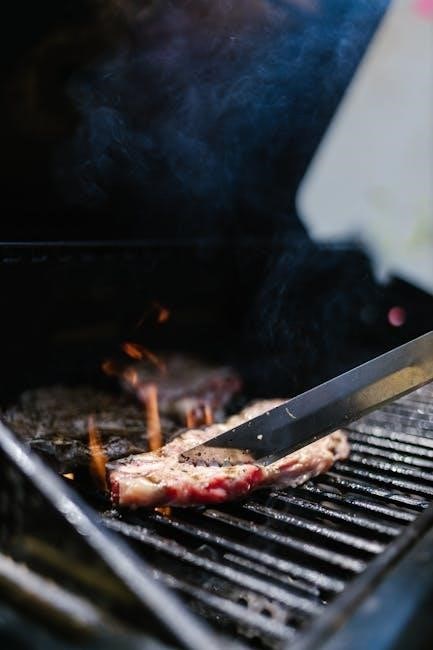
Enhancing your smoked creations with wood flavor is a cornerstone of the barbecue experience. Char-Broil smokers accommodate various wood types – chips, chunks, or pellets – each imparting a unique profile. Hickory delivers a strong, bacon-like flavor, while mesquite is bold and earthy, ideal for beef. Fruitwoods like apple or cherry offer milder, sweeter notes perfect for poultry and pork.
For charcoal smokers, soak wood chips in water for at least 30 minutes before adding them to the coals. This creates more smoke and prevents them from burning too quickly. Wood chunks can be placed directly on the coals for a longer-lasting smoke. Pellet smokers automatically feed wood pellets, providing consistent smoke throughout the cook.
Experiment with different wood combinations to discover your preferred flavors. Start with small amounts of wood and gradually increase to achieve the desired smokiness. Avoid over-smoking, which can result in a bitter taste. Replenish wood as needed to maintain a consistent smoke presence throughout the cooking process.
Remember that the type of wood and the amount used significantly impact the final flavor profile. Consistent monitoring and experimentation are key to mastering the art of wood smoke infusion.
Advanced Smoking Techniques
Mastering smoking involves utilizing water pans for moisture, temperature probes for precision, and, on select models, remote control via Wi-Fi connectivity. These techniques elevate results.
Using a Water Pan for Moisture
Maintaining adequate moisture levels within your Char-Broil smoker is paramount for achieving tender, flavorful results, particularly during extended smoking sessions. A water pan serves as a crucial component in this process, acting as a natural humidifier within the cooking chamber. As the water evaporates, it introduces steam, combating the drying effects of the heat and smoke.
This is especially important when smoking leaner cuts of meat, like pork loin or turkey breast, which are more susceptible to drying out. The steam helps to maintain a moist cooking environment, preventing the meat from becoming tough and brittle. Furthermore, the water pan contributes to temperature stability, moderating fluctuations and helping you maintain that ideal smoking range of 200-225°F.
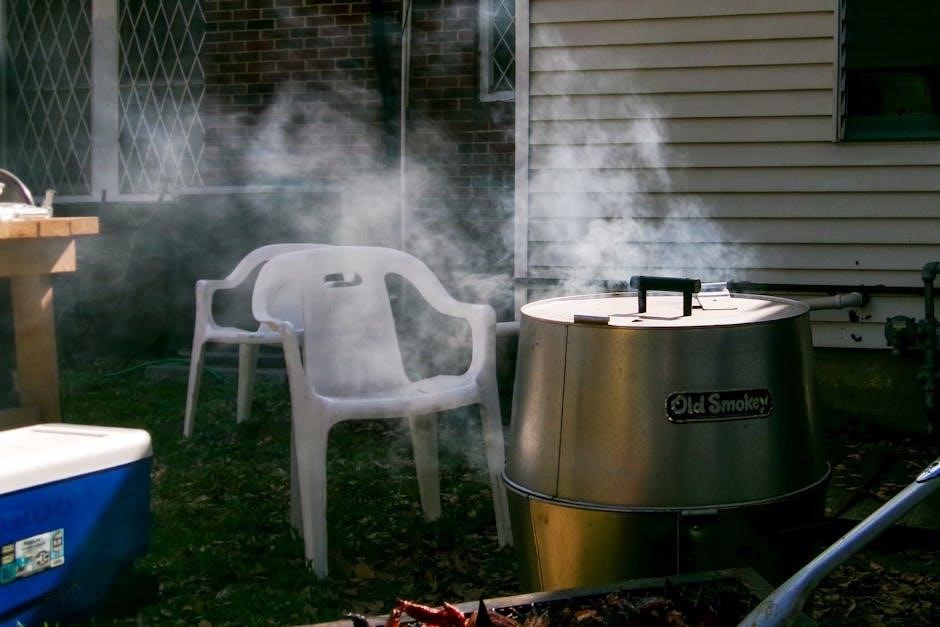
When using a water pan, ensure it’s filled with hot water before placing it in the smoker. This jumpstarts the evaporation process. Regularly check the water level throughout the cook, replenishing as needed. Consider adding flavorful liquids like apple juice, beer, or broth to the water for an extra layer of complexity in your smoked meats. Proper water pan usage significantly enhances the overall quality of your smoked creations.
Temperature Probes & Monitoring
Accurate temperature monitoring is absolutely essential for successful smoking with your Char-Broil smoker. Relying solely on the smoker’s built-in thermometer can be unreliable; investing in a quality temperature probe is highly recommended. These probes allow you to directly measure the internal temperature of your meat, ensuring it reaches a safe and palatable doneness.
Digital probes with remote monitoring capabilities are particularly useful, allowing you to track the temperature from inside your home, eliminating the need for constant observation. Many modern Char-Broil smokers, especially those with Wi-Fi connectivity, integrate seamlessly with probe data, displaying readings on a smartphone app. This provides real-time insights into your cook.
When using a probe, insert it into the thickest part of the meat, avoiding bone. Regularly check the temperature and adjust the smoker’s settings as needed to maintain the desired range. Consistent temperature control, aided by precise monitoring, is key to achieving consistently delicious smoked results. Remember, maintaining 200-225°F is crucial for optimal smoke penetration and tenderness.
Remote Control & Wi-Fi Connectivity (if applicable)
Certain Char-Broil smoker models now boast integrated Wi-Fi connectivity, marking a significant advancement in outdoor cooking technology. This feature allows users to control and monitor their smoker remotely via a dedicated smartphone application. Through the app, you can adjust temperature settings, set timers, and receive alerts when the desired internal meat temperature is reached.
The convenience of remote control is particularly valuable for long smoking sessions, freeing you from the need to constantly attend to the smoker. You can manage the cook from indoors, ensuring consistent temperatures without frequent checks. The app often displays real-time temperature readings from integrated probes, providing comprehensive monitoring capabilities.
However, it’s important to note that app execution can sometimes be a drawback, as noted in some reviews. Ensure a stable Wi-Fi connection for optimal performance. Properly configured, this feature elevates the smoking experience, offering unparalleled control and convenience for both novice and experienced pitmasters.
Cleaning & Maintenance
Regular cleaning is vital for optimal performance and longevity. Proper grease management prevents fires and ensures flavorful results. Long-term storage requires thorough cleaning and protection from the elements.
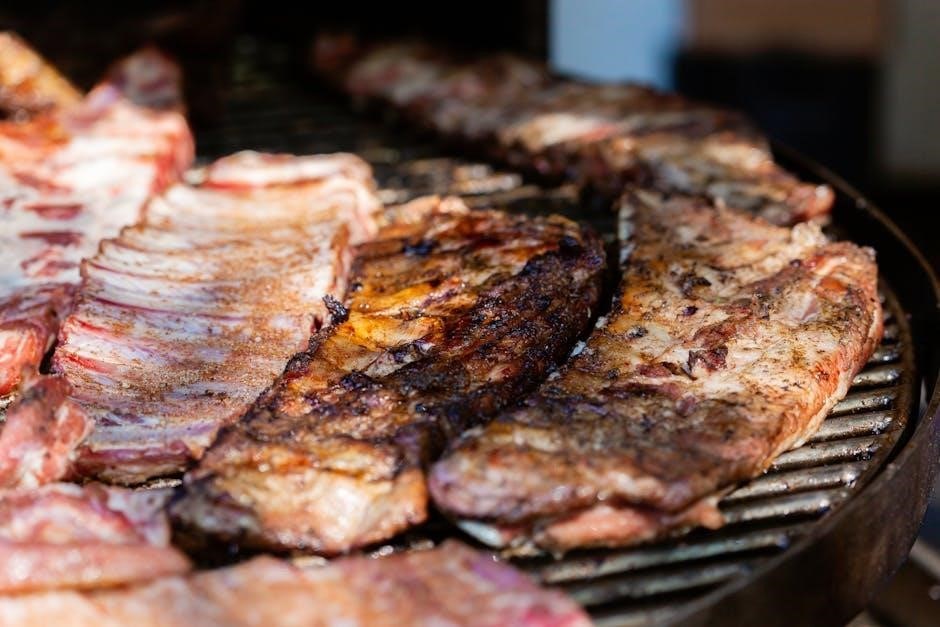
Regular Cleaning Procedures
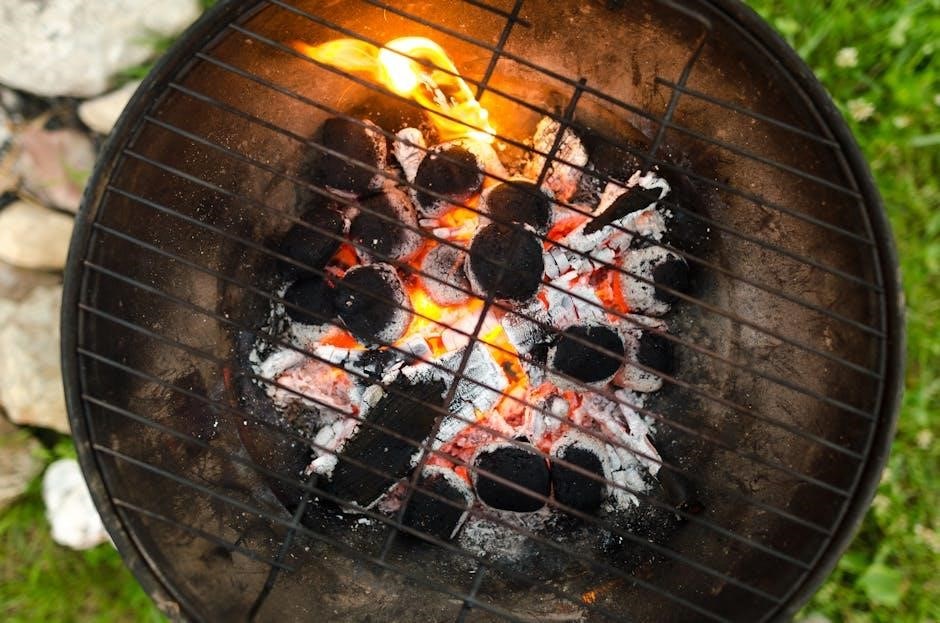
Consistent cleaning is paramount to maintaining your Char-Broil smoker’s performance and extending its lifespan. After each use, allow the smoker to cool completely before beginning. Remove ash and debris from the firebox; a shop vacuum works efficiently for this task. Inspect the grates for any remaining food particles and scrub them thoroughly with a grill brush – stainless steel bristles are ideal.
Pay close attention to the grease trap or drip pan. Empty and clean this component after every smoking session to prevent grease buildup, a potential fire hazard. Wash the drip pan with warm, soapy water. For stubborn residue, a degreasing agent may be necessary. Wipe down the smoker’s exterior with a damp cloth to remove any splatters or grime.
Periodically, disassemble removable components for a more detailed cleaning. Check the burner tubes (if applicable) for obstructions and clear them as needed. A thorough cleaning every few months, even with regular upkeep, will ensure your Char-Broil smoker continues to deliver exceptional results for years to come.
Grease Management & Disposal
Effective grease management is crucial for both safety and optimal smoker performance. Char-Broil smokers accumulate grease during operation, which, if left unchecked, can lead to flare-ups and potential fire hazards. Regularly emptying the grease trap or drip pan after each use is the first line of defense.
Allow the collected grease to cool completely before handling. Dispose of cooled grease responsibly; never pour it down the drain, as it can cause plumbing issues. Instead, solidify the grease with an absorbent material like kitty litter or sawdust, then place it in a sealed, disposable container for trash disposal.
Consider lining the drip pan with aluminum foil for easier cleanup. This creates a disposable barrier, minimizing scrubbing. Periodically inspect the area around the smoker for any accumulated grease spills and clean them promptly. Proper grease disposal not only prevents hazards but also contributes to a cleaner, more enjoyable smoking experience.
Long-Term Storage Instructions
Preparing your Char-Broil smoker for long-term storage, especially during colder months, requires thorough cleaning and protection. Begin by completely cleaning the smoker, removing all ash, grease, and food residue. A clean smoker prevents rust and discourages pests.
After cleaning, lightly coat the interior cooking surfaces with cooking oil to prevent rusting. Disconnect the propane tank (if applicable) and store it separately in a well-ventilated area, following all safety guidelines. Remove any removable components, such as grates and water pans, and store them indoors in a dry place.
Cover the smoker with a waterproof, breathable cover to shield it from the elements. Avoid using plastic tarps, as they can trap moisture and promote rust. Store the smoker in a sheltered location, such as a garage or shed, if possible. Periodic checks during storage can help identify and address any potential issues before the next smoking season.